


Breadcrumbs
These links will help you get back to where you want to go faster.
How Does an Ice Dam Form?
And How To Prevent Roof & Attic Damage
Winter’s picturesque snow may transform the Kentuckiana region—including Louisville, Kentucky, and neighboring New Albany, Indiana—into a winter wonderland. Yet beneath this frosty charm lurks a hidden menace: the notorious ice dam. Those glittering barricades of ice, often resembling elegant icicle chandeliers, might please the eye but spell trouble for roofs, gutters, and even home interiors.
Looking for a local, reliable, and trustworthy roofing contractor? Call or text 502-388-3911, or schedule a free roof inspection appointment online!
What you will learn in this article:
– Ice dams form due to a temperature difference on roofs: snow melts from heat escaping a poorly insulated attic, water flows down, and refreezes at colder eaves, creating ice barriers that trap water and damage roofs and home interiors.
– Warning signs of ice dams include icicles on eaves and gutters, sagging gutters, water stains on ceilings and walls, peeling paint or wallpaper, damaged shingles, and ice near vent pipes or chimneys.
– Key causes are poor attic ventilation, insufficient insulation, and air leaks around vents and HVAC fixtures allowing warm air to escape into the attic.
– Consequences of ice dams include water infiltration, mold growth, damaged insulation and structural components, increased energy costs, and potential roof collapse.
How Do Ice Dams Form?
Ice dams are the result of a temperature tug-of-war on your roof, a phenomenon driven by the delicate interplay between snow, fluctuating roof temperatures, and biting cold air—a reality familiar to residents in Louisville and surrounding counties.
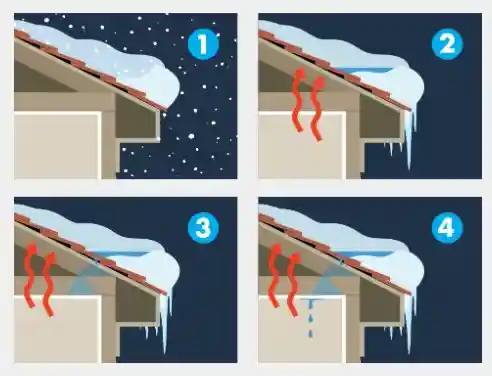
Here’s the rundown: after snow lands on your rooftop, it acts like an insulating blanket, keeping the underlying roof surface warm enough for some melting to occur—often thanks to heat escaping from under-insulated attics. That meltwater then slides down, only to freeze once it hits the colder eaves, building a stubborn ridge of ice. This icy barricade traps more water behind it, which can sneak beneath shingles and damage interior walls and ceilings.
A critical temperature gap—roughly 10 degrees Fahrenheit across the roof surface—sets this freeze-thaw cycle in motion, often when the outdoor thermometer dips near or below 22 degrees Fahrenheit. In regions like New Albany, Indiana, where winter temperatures frequently flirt with these numbers, addressing attic insulation and ventilation isn’t just a good idea—it’s essential.
Spotting Ice Dams Before They Turn Nasty
Early detection of ice dams is perhaps a homeowner’s best defense and a roofing expert’s secret weapon. In Louisville and Kentuckiana, keeping a keen eye for warning signs during inspections can save major repair headaches down the road.
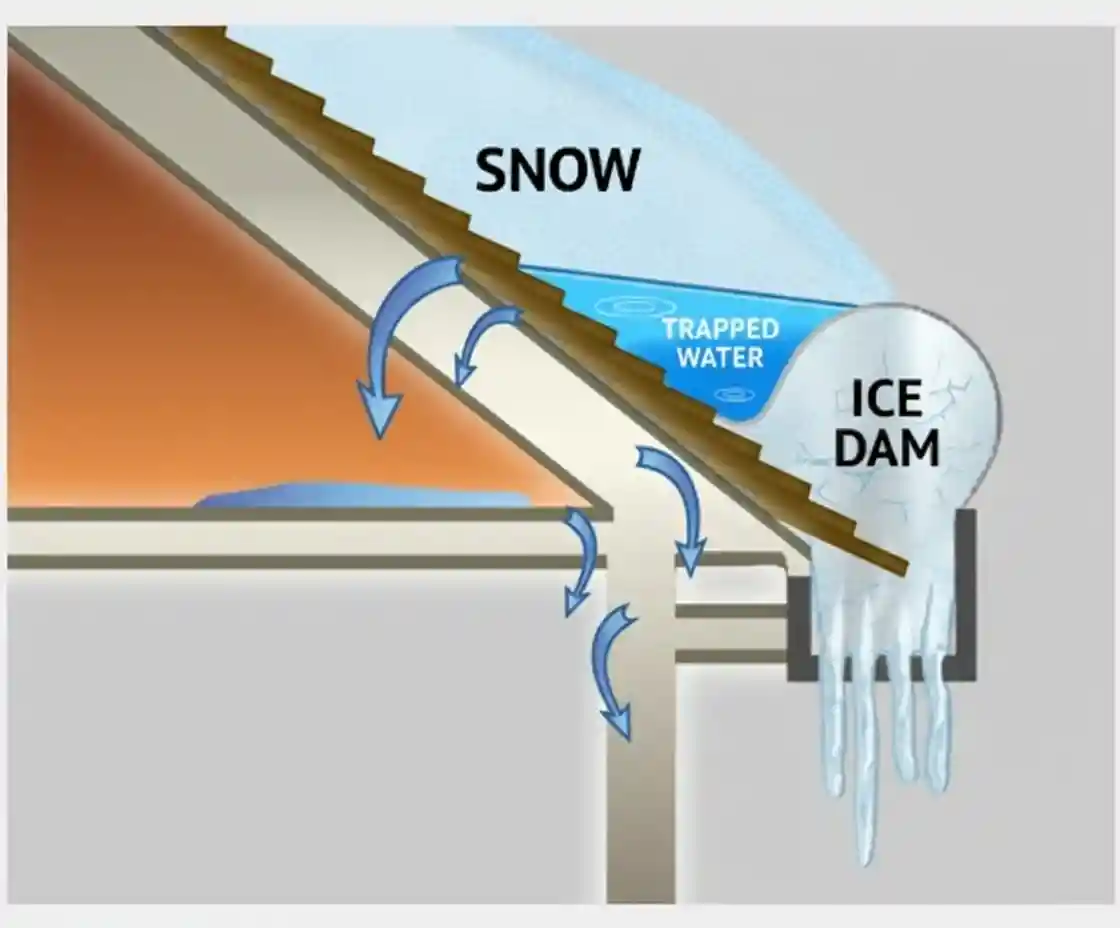
Signs to watch for include icicles festooning eaves and gutters, gutters sagging under frozen weight, water stains creeping along ceilings or upper walls (often yellow or brown), and peeling paint or wallpaper bubbling—a subtle scream for help. Additionally, shingles near the eaves may appear lifted, cracked, or missing due to trapped water pressure, and ice accumulation around vent pipes or chimneys often hints at drainage issues and heat loss spots gnawing away at your roof’s defenses.
Looking for a local, reliable, and trustworthy roofing contractor? Call or text 502-388-3911, or schedule a free roof inspection appointment online!
Why Do Ice Dams Target Your Roof?
Leroy, affectionately known in the community as The King’s Mitigator, stresses that ice dams are more than seasonal nuisances—they highlight architectural flaws that create the perfect storm for winter roof troubles common across the broader Kentuckiana area.
How to Ice Dams Form?
– Poor attic ventilation traps warm air, causing uneven roof heating.
– Insufficient insulation lets precious heat escape into the attic, melting snow from below.
– Air leaks—tiny gaps around plumbing vents, lighting fixtures, or HVAC ducts—serve as escape hatches for warm air, intensifying the ice dam problem.

Beyond just rooftop woes, the consequences run deeper. Water can infiltrate walls, ceilings, and floors, leading to noticeable stains, warped materials, and an unwelcome guest: mold. Damp insulation loses its thermal efficiency, pushing energy costs higher and further encouraging mold growth. Structural components aren’t spared either; trapped water weakens roof decking and can cause sagging or, in worst-case scenarios, collapse—a nightmare any homeowner in Louisville or New Albany wants to avoid.
Pro Tips for Keeping Ice Dams at Bay
Leroy advises a layered, proactive strategy for Kentuckiana residents aiming to stay one step ahead of ice dams:
– Schedule regular roof inspections to spot vulnerabilities before they worsen.
– Seal air leaks swiftly to prevent warm attic air from sneaking out.
– Increase insulation to reduce heat loss and prevent snowmelt.
– Enhance attic ventilation to maintain balanced temperatures and minimize ice buildup.
Prevent Leaks With Atlas Roofing’s WeatherMaster® Underlayment
Atlas WeatherMaster® Pro-Grade Ice and Water underlayment protects roofs from ice dams and water damage during winter. Its self-adhesive, fiberglass-reinforced, 50-mil thickness withstands harsh conditions, UV exposure, and high temperatures, providing durable, watertight protection compatible with all roofing types.

WeatherMaster Pro-Grade Ice and Water is designed for application along eaves, flashings, valleys, ridges, hips, rakes, dormers, and skylights. Featuring a self-adhesive backing, it can be applied directly to the roof deck, even under cold conditions, and is strengthened by a fiberglass mat for enhanced durability.
A Collaborative Path to Winter Roofing Success
Ice dams may try to freeze your roofing business in its tracks, but with the right game plan, they don’t have to. Roofing professionals in New Albany, Louisville, and across Kentuckiana can rely on innovative solutions and expert guidance from partners like Atlas Roofing to shield homes and bolster client confidence.
Are you prepared to reinforce your roofing and enhance your offerings this winter season? Connect with a nearby Atlas-certified contractor or schedule a professional roof inspection. Ultimately, when it comes to braving the cold months, having a reliable specialist such as Jeremiah Leroy from King’s Mitigator, Inc. by your side can be the crucial factor that shifts the outcome from risk to resilience.
Looking for a local, reliable, and trustworthy roofing contractor? Call or text 502-388-3911, or schedule a free roof inspection appointment online!